
"I am not a machine"
Leigh Sugar on resisting punitive ways of thinking/working regarding writing and training herself to trust softness ✧

This is a Beginner’s Mind interview, a series that explores the intersection of creative practice and mindfulness. Zen master Shunryū Suzuki Roshi said, “In the beginner’s mind, there are many possibilities; in the expert’s mind, there are few.” This series shines a light on the practices that sustain people in their daily lives and open the door to new possibilities. Subscribe for free below to make sure you don’t miss any future interviews. ✨
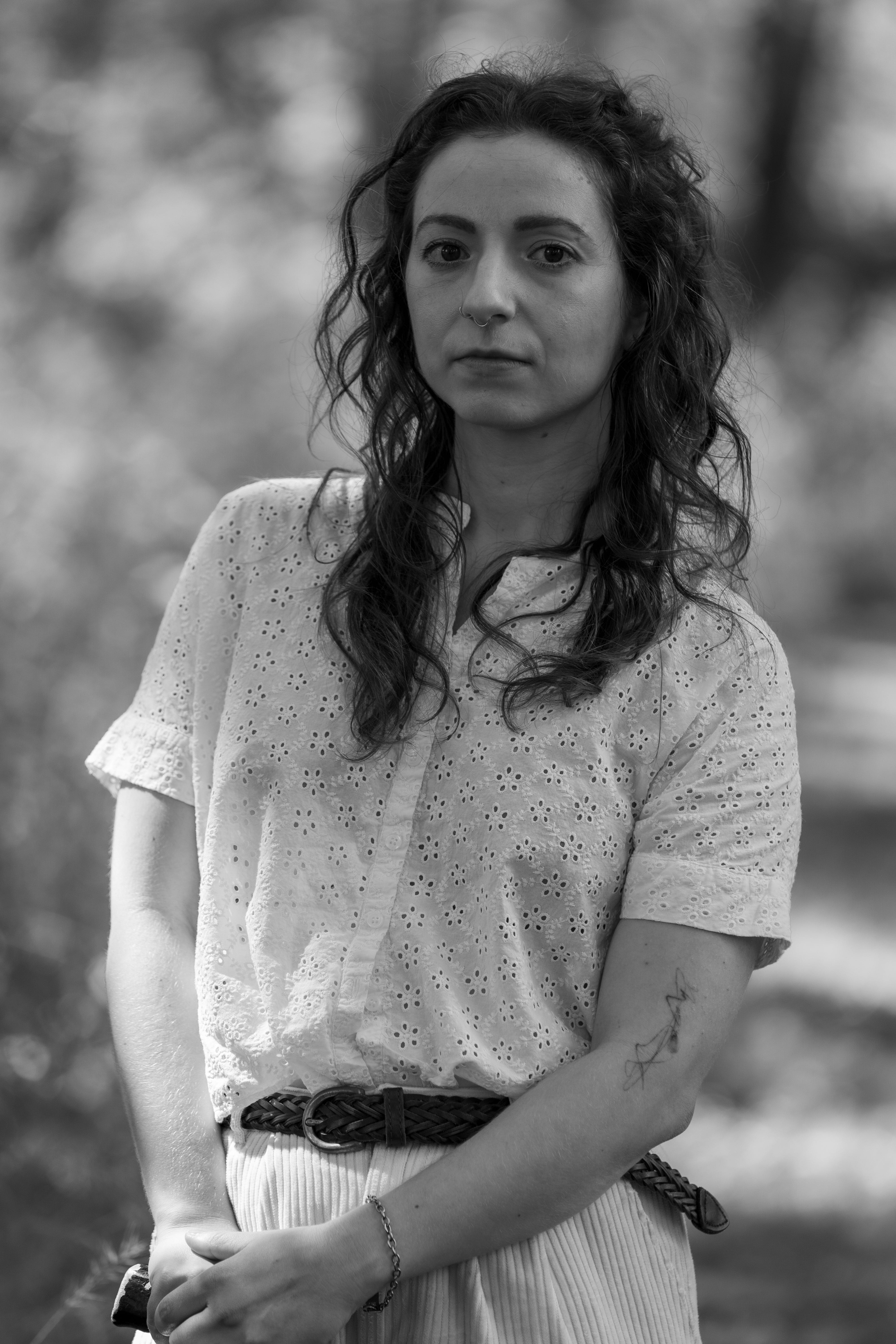
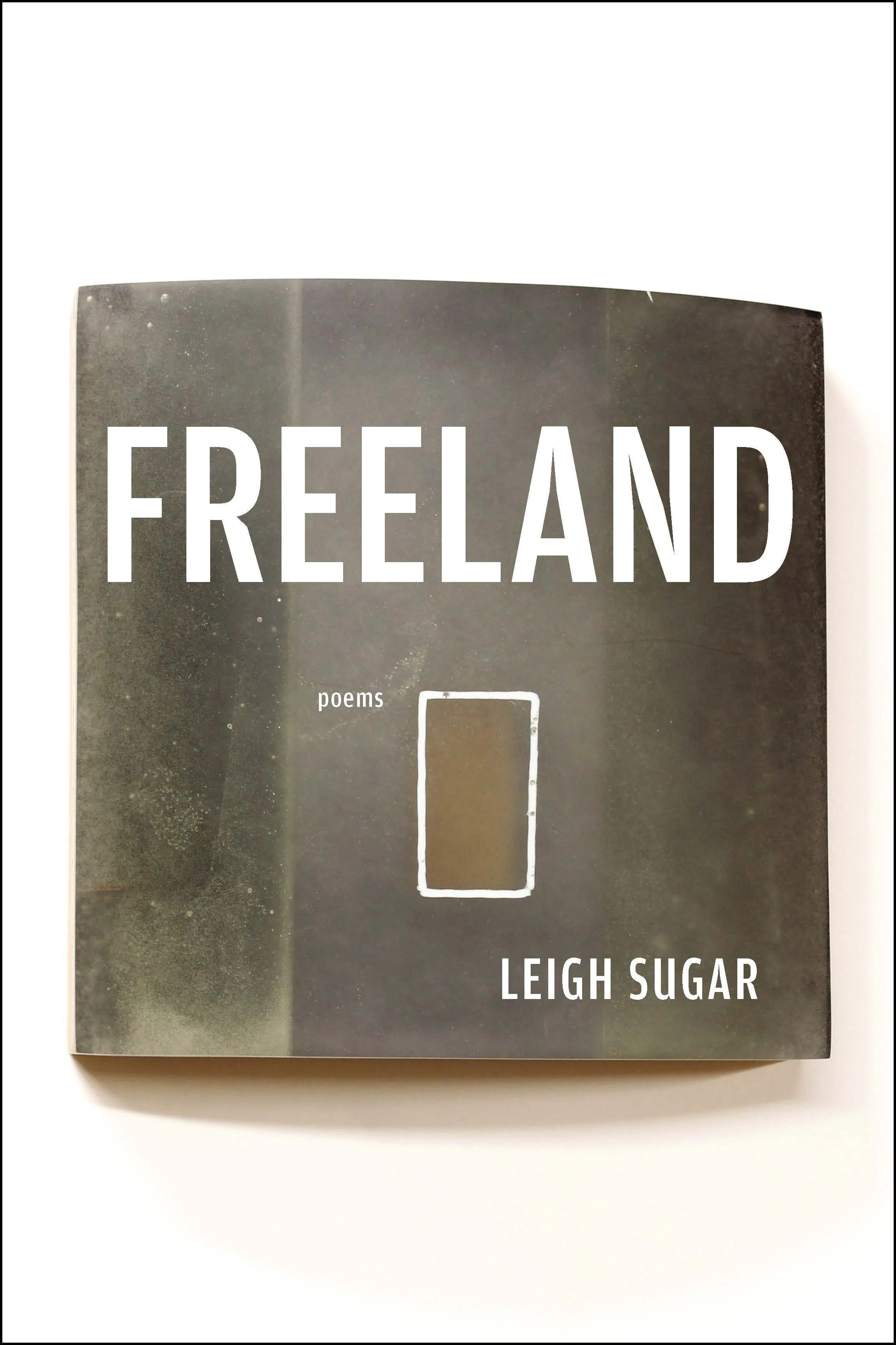
I’m excited to share an interview with writer, editor, educator, and learner, Leigh Sugar. Her book FREELAND (Alice James Books, 2025), explores the bond between the author and an incarcerated writer, “obsessively search[ing] form and language to communicate what happens in the U.S. mass incarceration system.” I started to read this book this past spring as one of many tasks to be completed, and I realized right away that I had to slow down. I had to read and pay a different kind of attention to these poems— to let each poem do its work on me.
The opening poem of her book, “Architecture School,” ends with the line, “What wonder—to see the thing, and through it.” This is what Sugar’s poems do: they see the subject, and they humanize and complicate it. They help us to see nuance without getting lost in abstraction and distance. These poems carry an intensity and tenderness that shifts beyond the bounds of what I expect poems to do—just when I think I have a sense of the larger arc of the story in this book, the architecture shapeshifts and shows me new possibilities. The Solmaz Sharif epigraph feels like a statement of the connective tissue the author sees everywhere: “There is nothing that has nothing to do with this.”
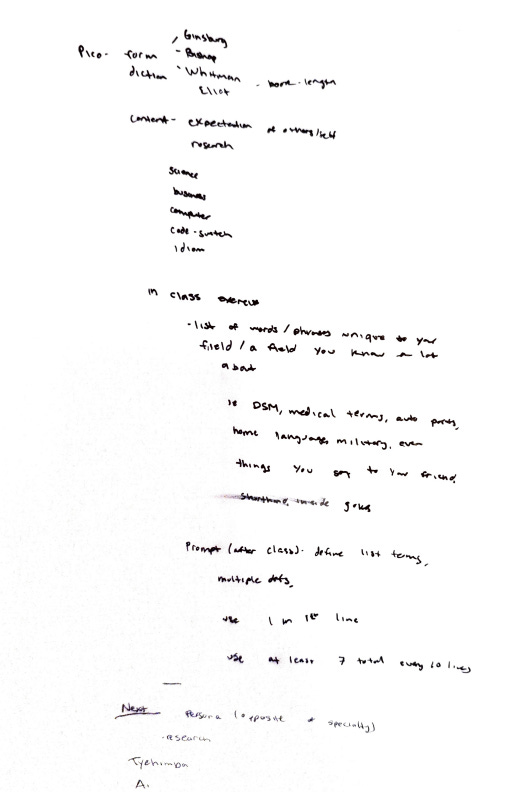
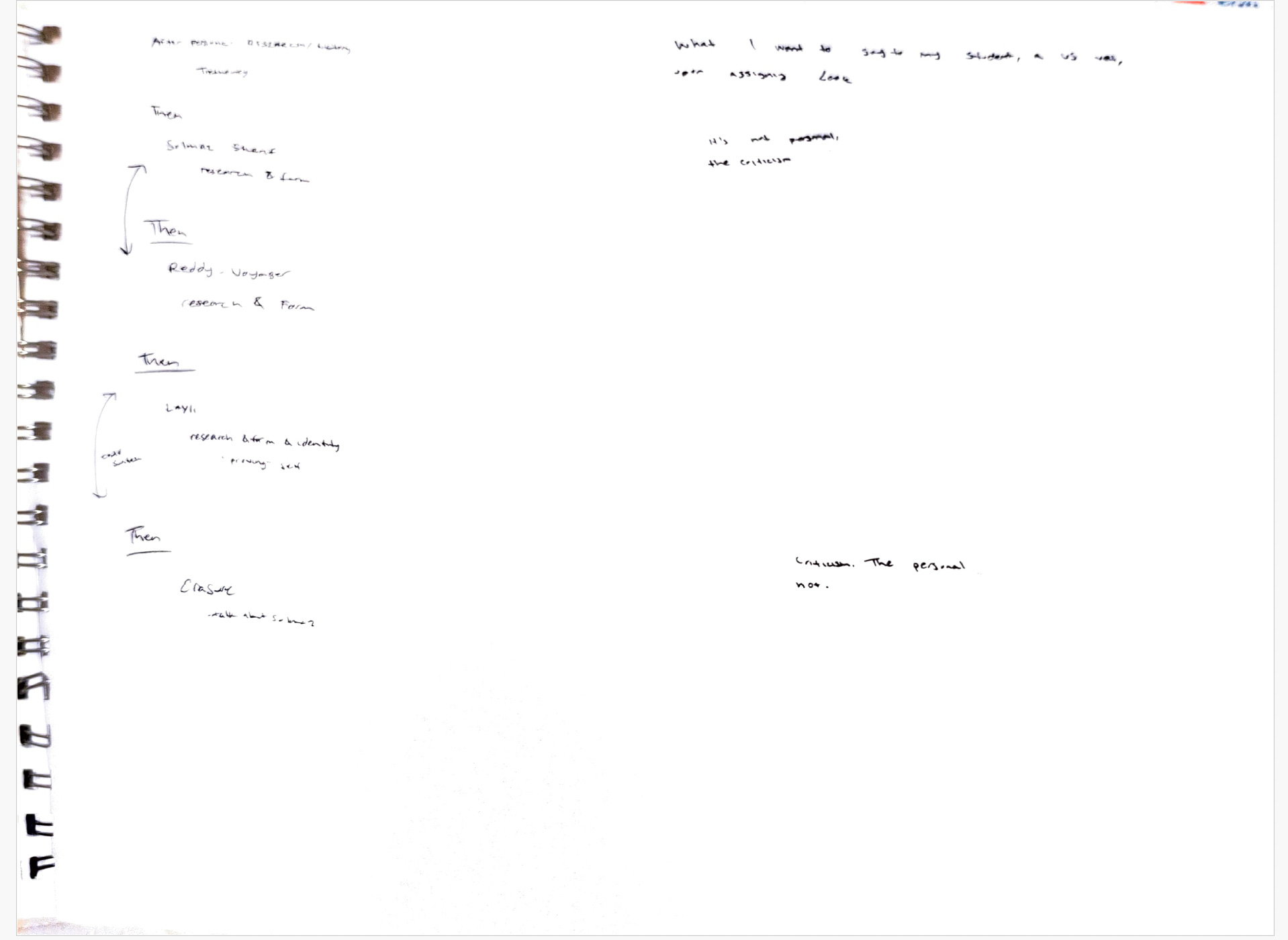
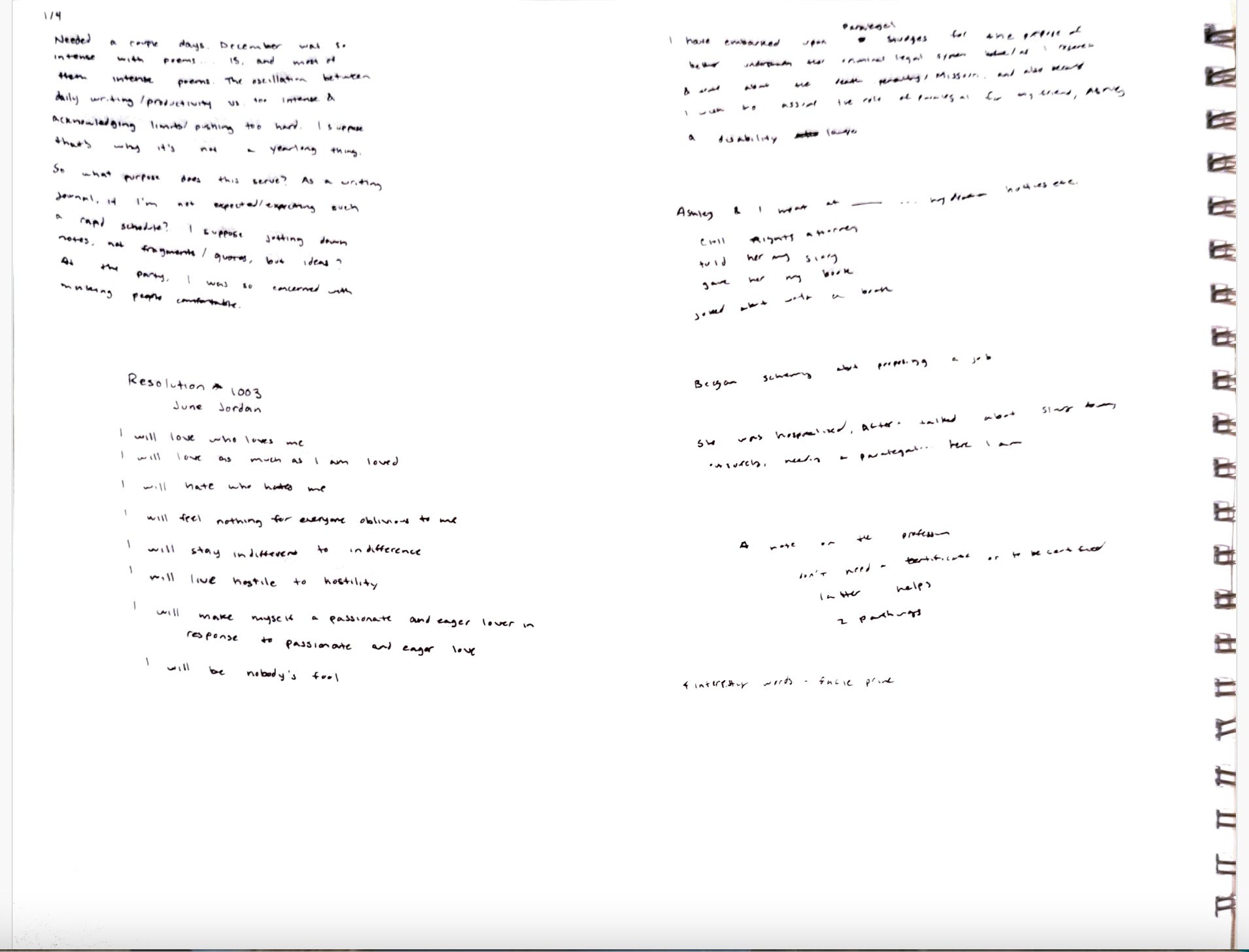
In this interview, Leigh shares hard-earned wisdom about living and writing with disability and chronic illness, including how she “tries to resist punitive ways of thinking/working regarding writing.” She also shares a unique perspective on mindfulness practices, informed by her healing from her time in a cult, and a traumatic brain injury in 2018. There’s so much rich material here, including a peek into Leigh’s notebooks, and a prompt that will get you engaging with a line from a writer friend of yours. Slow down and take some time to take this one in. You’ll be happy you did. ALSO: if you’re reading this in email, click this link to be sure it isn’t cut short! ✧
What’s your biggest struggle and/or triumph with your writing/creative practices these days?
I feel I have many struggles! One ongoing challenge is that I tend towards getting tied up in some “grand” idea or theory that I hope my poem/writing will achieve, to the degree that I feel bereft of the tools/skills to actually write whatever idea/theory I have. I.e., my ideas exceed my technical prowess. For example, I’m particularly interested in ideas of empire, colonialism, patriotism, and nation-hood, but those are very very big terms! As a poet, or writer, or artist, how do I enter these ideas in the smaller scale of the poem, or the stanza, or the line? I feel like I could speak or write at length about these very large, abstract, conceptual themes, but stumble/freeze when it comes to finding where to start, or entering the idea through more explicit image or diction.
Another struggle: attention, or lack thereof. I am very distracted, and distractable, and I also try to resist punitive ways of thinking/working regarding writing (i.e., bullying myself, or creating extremely rigid schedules I must adhere to), so finding a balance between finding ways to give time to writing, while remaining soft and curious, rather than mean and punishing, is an ongoing challenge. I have neurologic disease and brain injury, both relating to a traumatic accident in 2018. This reality has forced/continues to force me to orient differently to my writing, creative work, and really everything in my life. Before the accident, I was very “successful” at creating structure for myself; getting a lot “done.” In hindsight, this expectation or attachment to success was deeply rooted in ableism and capitalism, which are intertwined, but until I experienced disability myself, I could not fathom going about work/life any other way. I completed my MFA before the accident, so even my relationship to writing had been very much predicated on a history of a specific kind of rigor – reading a certain amount, expecting a certain product by a certain time, etc. Since becoming disabled, such expectations are simply irrelevant. I can’t even say difficult – my body/mind literally cannot engage in work – or the world – in a manner predicated on timelines and expectations. Still, this remains challenging to accept, as I observe many peers living and writing at a pace that does not align with my reality. I know, logically, that this is ok, that I need not compare myself with an alternate-universe or past version of myself, but emotionally, it is tough to stay motivated when it feels like everyone/everything else around me is speeding past.
A recent triumph is finding myself re-engaged in freeform/associative writing. Historically, I’ve had a lot of success (success measured by pleasure as well as output) with generating a lot of material then going back through the bulk to find threads I want to pull for a more focused piece of writing. I worked on my debut collection, FREELAND, for ten years, and found that much of the “glue” that held the book together was sourced from the copious pages I’d accumulated over the years. Going through old writing, I’d cringe at a page but maybe find a luminous line, for example, which has led me to believe in the value of accretion. So I have an ongoing document right now, where I write prose, or short little lines, or quotes from texts I’m reading, etc., and I find that growing this document is heightening my excitement about what I may find when I eventually decide (arbitrarily) to pause the drafting and instead start to review what I’ve created. This excitement over the next step motivates me to keep growing the document. The stakes are low here, which also feels triumphant. It lowers the activation energy required to start writing, as I’m not necessarily working towards a specific collection or idea at the moment; the goal is to simply add to the document.
What are the most important mindfulness/spiritual practices in your life?
I am a bit allergic to the term “mindfulness,” due to past trauma, when I was heavily involved in a space intended to cultivate mindfulness and spirituality. To put it bluntly, I was in a cult. Sometimes we throw the word “cult” around colloquially, but this was a cult cult. Like the kind that checks all the boxes. I associated with this group (it was disguised as a yoga community) for about 5 years, then took another 4-5 years to truly disentangle. I was 19 when I entered, and was very psychologically vulnerable (a very common reason folks get wrapped up in high-control environments). Though I would not wish this experience on anyone, I was introduced to many practices aimed at cultivating mindfulness, some of which are benign to properly supportive when practiced in a safe context. I was also a yoga teacher for many years (not in the cult community), and taught methods some might describe as “mindful,” including physical postures as well as breathwork and meditation.
Since disentangling from the cult environment, and learning more about the history of yoga and how it’s been appropriated in the West, I’ve found it very hard – “triggering,” perhaps – to practice certain techniques of breathwork and seated silent meditation. However, in recent years, I’ve been really vibing with very short guided meditations through the free app “Insight Timer” (I swear I’m not a salesperson), especially when I take away all the “rules” I was indoctrinated into, i.e. the need to be in a certain posture for a certain amount of time etc, or else. I do the same 5 minute guided meditation every morning before I get out of bed: I find a comfortable position and turn it on. Often I kind of zone out. Past me would not count this as “meditation,” but it’s a nice way to start the day, and the ritual of having the same gentle guidance before I get out of bed is really soothing.
Sometimes I’ll do another guided meditation in the middle of the day while lying on the acupressure mat I stole from my dad. I have severe OCD, and struggle with executive function in addition to anxiety, so I find it really difficult to “make” myself stop and reset. Stopping for a 2 minute meditation is much more feasible for me than trying to sit for an extended period of time, so I try to appreciate taking those moments when I can.
I also journal every day, but often it’s just a word a two. It’s more of a routine that tells my brain what time it is, etc., than anything more “sacred.”
I walk a lot; I’m not sure I would call it mindful, necessarily, but I am very physically active and if I don’t feel I’ve used my body, I’m unable to focus. I listen to audiobooks when I walk, or – sue me – scroll tiktok, if I’m on the treadmill.
From the above, it’s probably not surprising that I struggle with the concept of “spirituality.” I feel extremely divorced from nature, which is not atypical for a white person growing up in suburban/urban areas. I fantasize about having a deeper connection to and knowledge of my local natural surroundings, and imagine that such connection could translate to a sense of greater belonging, perhaps on an existential level. My lived experience, though, is very humanistic. I was raised in a culturally Jewish home, and while I’m not religious, I resonate deeply with some of the tenets I grew up on, particularly ideas of Tzedakkah (I now think of it as a form of mutual aid) and Tikkun Olam (leaving the world better than you found it). Another very Jewish characteristic of my family is an obsession with books; Jews are known for repeated analyses of the Torah, and while my parents weren’t Torah scholars, they absolutely carry what I think of as a characteristically Jewish sort of relationship to intellect. Put simply, they are voracious and highly interactive readers. My childhood home was lined with books – fiction, nonfiction, medical texts (my parents are doctors). I am extremely grateful for growing up in such a home; I didn’t realize it was special until observing other homes, wondering where all the books were (they weren’t).
I believe in the sanctity of care – for one and other, ourselves, our surroundings – and also, struggle deeply with aligning my actions with this belief. All I know is that if I set extreme expectations for a certain kind of productivity, or even a certain kind of “mindfulness” practice, I shut down. The opposite mode of “shut-down” – that’s how I try to organize my time/live my life.
Do you have a mantra or motto related to your creative/mindfulness practices/life?
What comes to mind is the phrase “It’s ok.” I repeat this to myself when I feel overwhelmed (by anything, but for our purposes, writing). I know it’s very simple; I think that’s why it’s helpful for me. My tendency is overcomplication. I’m good at creating grand loops for myself, circling or obsessing over a thought ad infinitum. “It’s ok” reminds me that for the most part, what I am doing is not life or death. This is not to discredit the importance of writing, or diminish the value I place on my creative work, but to interrupt the panic that for me often accompanies obsession in a way that very much gets in the way of my ability to engage with creative ideas or even take care of myself.
Another idea I often return to is attributed to CA Conrad, one of the writers who’s most influenced me not only through their work, but also/especially through their interviews and the way they speak about poetry/living a creative life. In an interview I read, they were talking about their collection The Book of Frank, and Conrad shared how they radically changed their practice after its publication. They spoke about how they treated themself like a “machine” when writing Frank, expecting certain output on a certain timeline. Conrad then proceeds to explain how much of their life has been devoted to moving away from the machine, particularly as a child of factory workers. So this reminder, “I am not a machine” or “I do not want to be a machine” is helpful for me when I notice my rigid/ableist mind starting to expect specific outcomes for myself.
How do you see your creative/mindfulness/spiritual practices connected to/shaped by other practices or work in your life?
I was formerly a professional dancer and self-proclaimed “gym bro.” I trained and performed ballet, modern, contemporary, and improvisational dance for 25 years (until my accident). This degree of physicality instilled an extreme importance of movement in my life. Movement is critical to my daily living, and something I’m even more grateful to have access to after experiencing extended periods of time being mostly bedbound due to various illnesses, complications, and medical procedures.
In the couple years before becoming disabled, I loved attending dance class multiple times a week at various studios in New York. I often joke that I danced more than I wrote during my MFA (probably not true, but it feels that way!). I don’t necessarily consciously connect my movement art to my writing practice, but I’m sure they inform each other, not least in that dance class and intense physical exertion has a way of forcing my mind to focus only on my body and its survival. I’m grateful to have had such an intense outlet/opportunity to disengage from purely “brain” activity. I know many writers/scholars who think of themselves more as a brain in a jar, completely detached from their body. I couldn’t relate less, though there are probably pros and cons to both ways of being!
While I don’t think of myself as a visual artist, I studied architecture in college for a couple years (dropped out of the program so can’t call myself an architecture major, though), and the technical skills I learned in those classes absolutely inform my poetic work. I’m very interested in the technology of the book; its materiality, its limits, its possibilities, and have a penchant for playing with form in terms of how my writing sits on the page. I also dabble in bookbinding, and have repurposed my architecture drafting tools for this activity. My little architecture stint shows up in my work a lot more than I ever would have imagined!
Are there any books / writers / teachers / approaches that have been transformative for you that you would recommend to readers?
In order of when I encountered them (from earliest to most recent), my eternal recommendations (mostly poetry, some not) (this is not exhaustive):
The Book of Margins, by Edmond Jabès
The Bluest Eye, by Toni Morrison
The History of Madness, by Michel Foucault
Kitchen, by Banana Yoshimoto
What the Living Do, by Marie Howe
Ways of Seeing, by John Berger
How Should a Person Be?, by Sheila Heti
One Big Self, by C.D. Wright
The Book of Frank, by CA Conrad
Don’t Let Me Be Lonely, by Claudia Rankine
Sympathetic Little Monster, by Cameron Awkward-Rich
Look, by Solmaz Sharif
Voyager, by Srikanth Reddy
Earth Room, by Rachel Mannheimer
Coining a Wishing Towe, by Ayesha Raees
Tommy Pico’s tetralogy, beginning with IRL
Public Abstract, by Jane Huffman
Ward Toward, by Cindy Juyoung Ok
One Day, Everyone Will Have Always Been Against This, by Omar El Akkad
Maybe the Body, by Asa Drake (brand new to this list, and to the world!)
All of these radicalized my understanding of what writing/language can do or be. Many of these texts resist easy summary; they reside in some liminal space of experimentation, cultural criticism, deep introspection, and hard-won wisdom. It is likely I have an affinity to these books because I personally struggle with linear narrative (both in my writing and how I generally think about my life), and this allergy to traditional “logic” is central to all the above, though in different ways for each. Also, each of these books get me excited about writing, which feels like the greatest gift.
What advice would you give someone who is trying to start or restart a creative or mindfulness/spiritual practice?
Lower the stakes. First, recognize you’ve survived your whole life until now, so if you are hoping to add or take on a new practice, be it creative, mindful, or otherwise, you know you’ll be ok if you don’t take it on.
This might sound like a resignation, but to me, it feels like the opposite. It feels like generosity, honesty, and possibility. Because I can easily tend towards rigidity, compulsion, and impossible expectations of productivity, I often get extremely overwhelmed by new ideas, goals, or intentions. Reminding myself that this is not life or death, and that I’ll be ok regardless of what I take on, lowers the activation energy required to just begin or try something new.
Also, ask yourself (and answer honestly): Why do I want to do this? What is the easiest thing I can do to work towards this intention?
I think many folks, including myself, are often suspicious of “ease.” Those of us raised in the U.S. have been surrounded by an unrelenting worship of “hard work,” and may doubt the validity of any activity that comes gently, or without strain. How can you train yourself – how can we train ourselves – to trust softness? It takes practice and time to learn what/how you work when force is taken out of the equation. To uphold difficulty and strain as superior is such a capitalist paradigm, and I don’t wish to replicate capitalism in my being or actions any more than is already inevitable.
A Prompt from Leigh ✧
A new-to-me prompt was revealed in my most recent teaching experience, where I was facilitating an ongoing poetry workshop via Hugo House. One of the writers, when providing feedback to their peer, mentioned how much they adored a certain line in their piece, and joked about stealing it. I quickly realized this was a great exercise, and suggested that each writer should choose their favorite line from one of their peers’ workshop poems to use as the first line of a new poem (of course, I also explained how to properly credit the original author). This isn’t really groundbreaking – a lot of us steal or borrow from writing we like – but the act of doing so from a peer made this particularly exciting. There is something so sacred about the workshop environment and experience – how closely and carefully we really pay attention to each other and our ideas – so “stealing” work from people we’re in community with allows for a certain deepening of the relationship, and a commitment to whatever conversation may be unfolding in the writing.
If you’re not in a specific workshop right now, ask a friend if they’d like to swap a few new/unpublished poems. The point is to borrow the line from a poem that is very specifically for your eyes, and not something already published/”esteemed”/”famous.”
Leigh Sugar is a disabled artist currently living in Michigan. Her debut poetry collection, FREELAND (Alice James Books, 2025), was a finalist for both the Alice James Award and Jake Adam York Prize. She also created and edited the anthology That’s a Pretty Thing to Call It: Prose and Poetry by Artists Teaching in Carceral Settings (New Village Press, 2023). She holds an MFA from NYU and an MPA with specialization in criminal justice police from CUNY, and has taught writing in various settings including the Institute for Justice and Opportunity, Hugo House, Poetry Foundation, and prisons in Michigan. Leigh’s work appears in magazines and journals including POETRY, Split this Rock, The Rumpus, and more. She loves string cheese and spends copious amount of time with her pup Elmo.
More from Leigh ✧
FREELAND (Alice James Books, 2025)
Free reader’s guide to FREELAND
That’s a Pretty Thing to Call It: Prose and Poetry by Artists Teaching in Carceral Settings (New Village Press, 2023)
“On Erasure” – essay and prompt at Poetry Foundation
You can find Leigh on Instagram at @lekasugar
Leigh’s “very often out-of-date (but nevertheless somewhat informative!) website, where she posts forthcoming readings, publications, and teaching.”
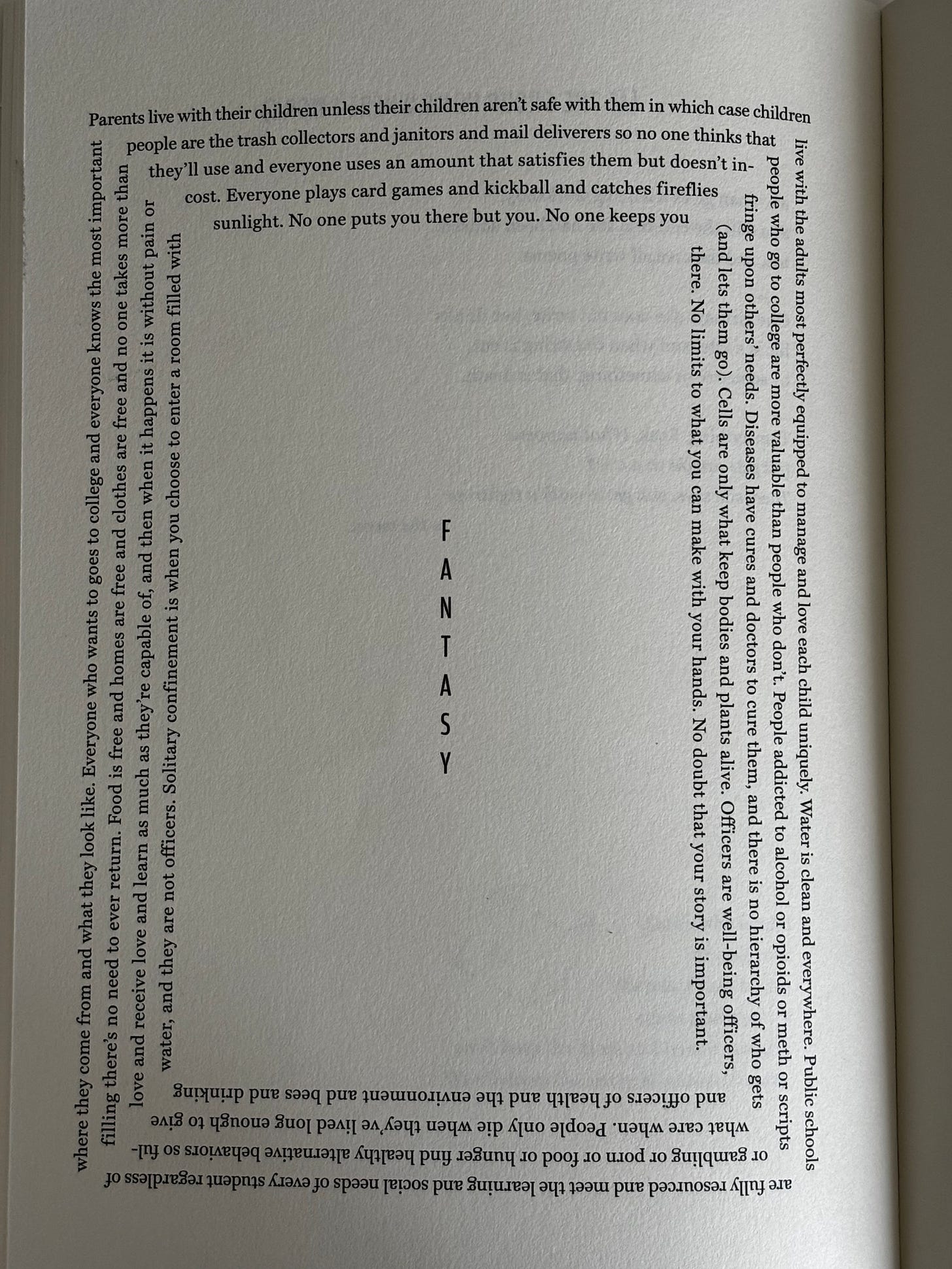
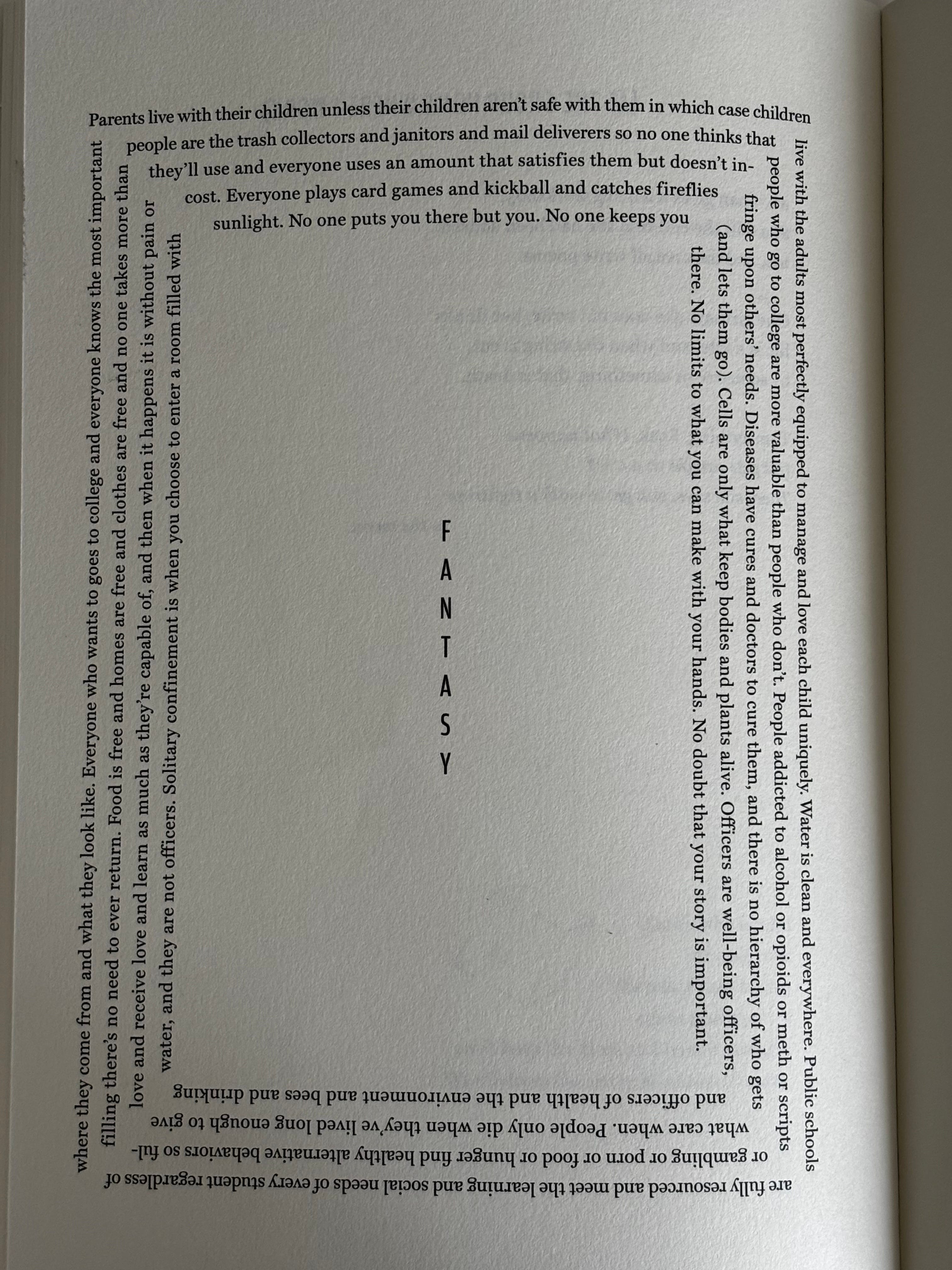
one of my favorite poems from FREELAND (of many) Your turn: Do you have any other questions or thoughts to share with Leigh?
Catching up with Beginner’s Mind Alums ✨
Heather Lanier has a gorgeous essay out in The Sun, “The Good End of Pleasant Street.”
Nancy Reddy and Cassie Mannes Murray are talking about how to find your audience on Substack Live this Mon, June 22nd at 10:30 am EST! Details at Be Less Careful!
In Case You Missed It ✨
🎉 TODAY, June 22nd at 12 EST 🎉 we have our FREE Ass in Chair Collective which is also our Summer Solstice Party! We’re still mostly writing and making art together, but we’ll also raffle off our new AIC stickers and some subscriptions! It’s the perfect chance to give it a try. Link in post to join👇🏼

✨ Our Practice of Attention Book Club is still rolling along! The author, Cody Cook-Parrott, will join us on Wed, July 22nd from 12pm-1:30 pm EST to chat about the book. And, on Tues, July 28th at 6 pm EST, we’re going to join forces with Catherine Pierce’s “Summer of Attention” crew for a special workshop 🎉

Before you go, will you take a moment to hit the heart button or leave a quick comment about what strikes you here? This one simple action is incredibly effective at helping to spread the word about Leigh’s work! Or, send it to a friend that you think would love what she shared. ✨
✨Be Where You Are is a newsletter for anyone who hears the humming underneath it all and wants to create spacious time on this planet right now.✨ To reply to this newsletter, just hit reply. I’d love to hear from you! You can also find me on Instagram/Facebook/Bluesky or find more info at my website.
The line that stuck with me was "how can we train ourselves to trust softness." Made me wonder if the old machine-mode was less about output, more about protecting some younger fear that slowing down meant disappearing. Grateful Leigh put that so plainly.
Thank you for the title of this and sharing your interview with Leigh. There was a lot to slow down and take in, but it was all helpful. This one in particular about not being a machine really resonated with me.