
"Carry a question"
poet, eurythmist & visual artist Gail Langstroth on the power of play, compost & duende 🌀

This is a Beginner’s Mind interview, a series that explores the intersection of mindfulness and creative practice. Zen master Shunryū Suzuki Roshi said, “In the beginner’s mind, there are many possibilities; in the expert’s mind, there are few.” This series shines a light on the practices that sustain people in their daily lives and open the path to new possibilities. Subscribe below to make sure you don’t miss any future interviews. ✨
When I asked poet, eurythmist, and visual artist Gail Langstroth to do an interview for this series, she said, “I’d love to, but I can’t write it. We have to talk.” I had a feeling she might say that. There’s a wild, expansive quality about Gail that you feel when you’re in her presence and which translates through to her creative work. We had an hour-long conversation over zoom that I’ve condensed here for you, and in true Gail Langstroth fashion, it does not follow the typical structure. It meanders and dances and winds toward its questions and its truths. Read on, friends, for a window into Gail’s work and her creative and mindfulness practices. (*Note: this interview goes beyond the length that will show up in email, so if you want to be sure you’re not missing anything, click here to read the whole thing). 🌀
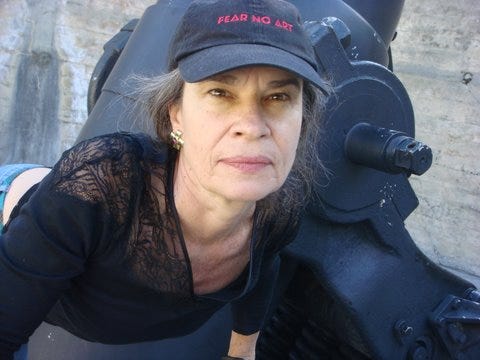
Emily: I think of you as a kind of superhuman level creative force. You engage in so many different art forms, and you have an understanding of how to bring these forms together to create something new. Reading your chapbook Ghost Friends/Duendes Amigos was a full body experience more so than when I read other books, in which it feels more like the work operates only on an intellectual and/or emotional level. There’s a real core of play and delight in your work, whether it's eurythmy or the word on the page, or both. I admire the way you’re interested in these intersections. Can you bring us into your creative and mindfulness practices from here?
Gail: Emily, what you say is a gift. Often I feel myself a bit overwhelmed—by all of these realms in which I reach with my practice. This practice which is also art, and art which is what saves my life. It gives me meaning. And when someone affirms that, it's a gift. Like everyone I can feel alone at times, alone with all of these branches to my tree. When the word mindfulness comes up, I have a sort of rejection. Like new age-y, like a quick fix. But then I hear “the mind full of nest.” I hear “nest.” This place where I cuddle in, get close to Self. And you might say the not groovy, comfortable self, rather where myself, my ego, my eye, is on that edge. That edge, teetering.
I feel the artistic process is a dangerous endeavor. When people say, “Oh, you have a gift, you've got this, that, and the other thing,” I think, You try hanging on at the abyss every day. Walk that threshold between what is, what's coming, what’s unknown, or known, and how you may be responding, receiving, rejecting. This, at times is very, very difficult. And it is a never finished—
like the last three days I was in a horror place; I couldn't get to that sweet spot. And, I realized it was because I had presented at a conference in Cambridge, at Harvard to be exact. And literally, once the conference was over, I hit a raised split in a sidewalk and fell. I'm just returning from the shock. So yesterday, finally, I wrote, wrote, wrote, and was all warm and happy. Hours later, I looked at what I had written only to recognize a lot of garbage in there. But, at least, I was reminded of that joy place, where I can come to that mysterious feeling of self, that questioning place: Who Am I?
And, to your questions, what do I do when I have writer's block? Well, I don't want to jinx myself, but I have never experienced that. Why? Because this eurythmy thing that I've been doing for over 54 years is a kind of good magic.
In doing eurythmy we recognize that when we speak we are shaping air. Each sound we speak makes an invisible gesture in the air. In eurythmy I quieten my larynx; I attempt to make that air gesture visible with my limb movements. Over the decades, dedicated to this art form I have come to experience how the WORD is in me. In us. We each carry the results of all these sound/word movements in us. WOW. My body is word.
When I begin to sense this movement in me, when I move a poem in eurythmy . . . it’s like oiling my soul/spirit joints. My physical joints as well.
And, when I write, I can sometimes sense that primal creative, uniting life force. WOW. It’s subtle, but real.
My morning ritual when home is to sit at this marble table, open the curtains, have my espresso, my muesli, and look out at my tree. It’s a sugar maple, but I call her my blood maple. Slowly, my journal open, an antique gravy bowl from grandma filled with pens and sharpened pencils, a book or three that I might be reading, I begin to sense how that very word substance, mystery of who am I: me-thing, begins to enter. In other words, IT comes to my nest, it nests, it re-nests in me after the night, after that flight in the night, where I hopefully leave, go out and am in that other sea of being.
Dr. Rudolf Steiner, who gave the first indications for the art of eurythmy in 1912 suggested specific choreographic movements. One of his indications: that of how to express a question through a form moved in space, led me on a decades-long investigation. He indicated that the form of the spiral, winding in, or winding out, can be used when a question appears in a poem.
Now back to life. When we really ask a question, we are forming a spiral. Like the fern that unfurls in the spring. We carry the question inside, (a point inside) and are open to the periphery, (the world around). We place ourselves in a kind of attention, tension. We see how the world responds to our question. The soul is in a spiral. Active, questioning.
Returning to that question, what do you do for writer's block? Maybe . . . carry a question. Since December, I have been carrying a question. I’m not going to share it because it's very intimate. But I form this question three times a day. For instance, in the car yesterday, I was driving and I remembered it’s 12:15. Ok. I take my right pointer and thumb fingers and pinch my left ear lobe. With the gesture I sound my question. Then I close by remembering dear friends who may need some light right now. Individually I picture each of them and send healing thoughts their way.
This is a kind of mindfulness. Filling my “nest” with spirit presence and love toward friends in need. Something done regularly, consciously in a rhythm.
Rhythm is life and we should consciously try to create our rhythms and remain within our rhythms as best we can. An example is the basic rhythm of sleep and waking, you know, staying within that rhythm is a life force. It's an affirming life force.
For over twenty years, I carried a certain question. And by golly, I got an answer. You can't want the answer. The answer, as in any true work of art, will be a surprise.
You just do your exercises, you commit yourself to your practice, to your warm-up, to whatever it is, and when that thing happens it's grace I say, a gift.
And all of that movement, all of that writing, all of those collages, all of those line drawings, all of those deeds, attempts, trips, thoughts, encounters, lectures, performances—they all go into my great compost pile. My history is stored there.
Another WOW. All I have to do is dip into that pile, draw from it. And YES, as in nature, nano organisms have been transforming all that carbon into oxygen. What happens in a compost pile is there at my disposal. Just close my eyes and reach out, into THAT.
The poet Jan Beatty once said to me, “Don't throw anything away.” She cites this example of how she opened up a pile of something and wrote a poem out of what lay on some scrap piece of paper. To see. To recognize, be open to Surprise. WOW.
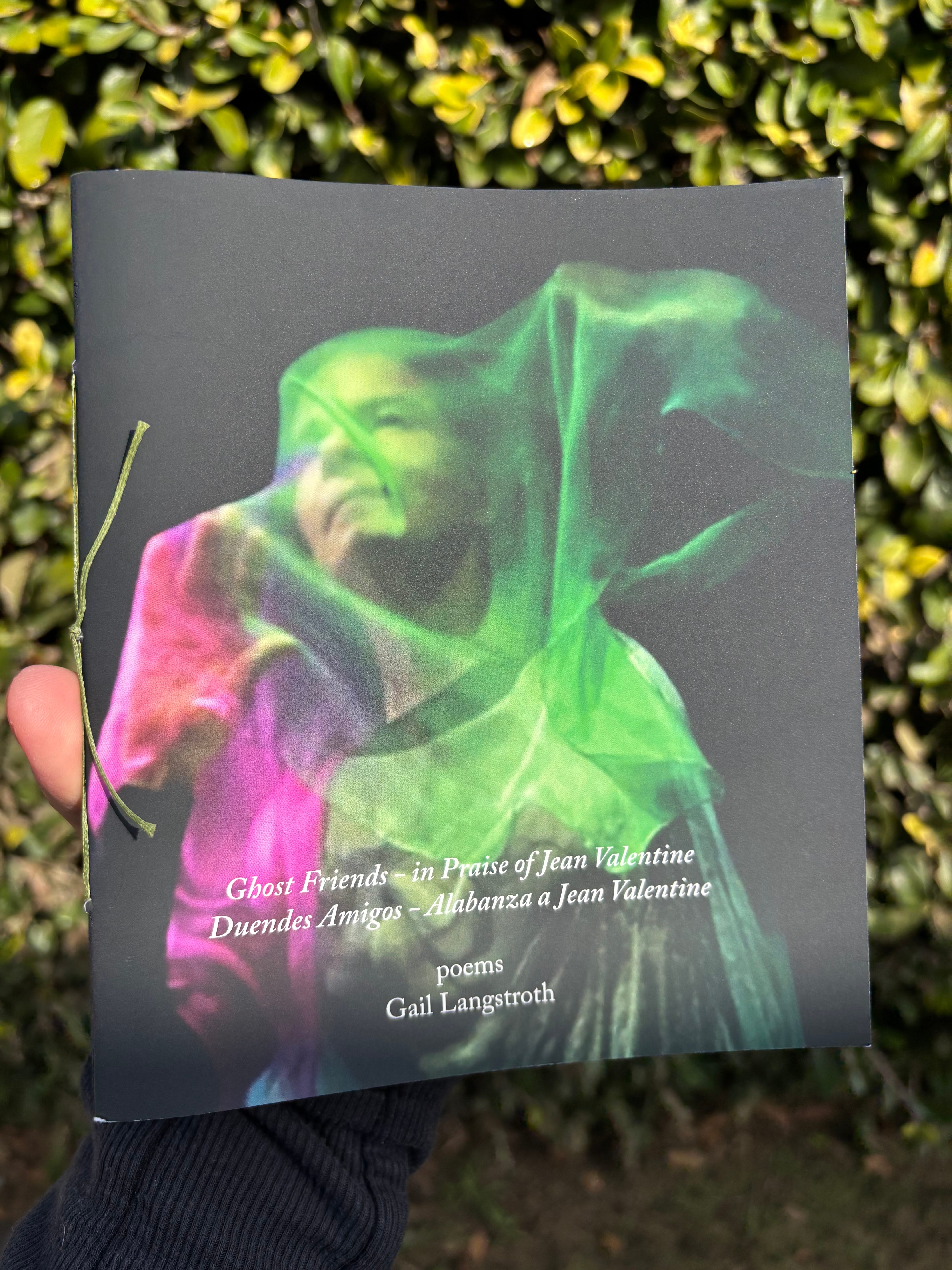
Let’s return to the word PLAY, what you mentioned a couple of times in the beginning.
Friedrich Schiller, the German philosopher, poet, dramatist (1759 – 1804) had a weak physical constitution. A Danish prince offered Schiller a chance to recover and gain his strength. “My wife and I have a room in our castle. Please come. You can stay as long as you want, and you will get a monthly stipend.” Schiller couldn't make the trip, but he accepted the stipend and that allowed him three years to convalesce. As thanks to the prince Schiller wrote The Aesthetic Letters on the Education of the Human Being.
In these letters Schiller lays down three impulses, the IDEA impulse, The MATTER impulse, and the PLAY impulse. The Play impulse is where the human being is FREE, neither caught in the idea, the box of the head, nor pressed by the physical stuff of life, rather in the free-flow creative space: PLAY.
Like a child, if I can be in that space of creating, in PLAY, I am free.
After every stunt of performing or teaching, I sit at my desk, and I write in my chronicle what happened. I observe what happened. The good, the bad, the ugly, whatever or whoever I met. Sometimes it's pages long, I close the folder, and realize again, because I observed what was happening, because I consciously wrote it down. That's another gift that we have with the word when we write something down,—that something becomes a pillar of our being. Carries the potential of awakening as well.
I add it all to my compost pile. If I had let that something go and not observed it, I maybe wouldn't be able to reap its magic fruits at some point.
My Pillars: PLAY, Compost, and Duende.
Federíco Garca Lorca's essay, “The Theory and Play of the Duende” is a work that I return to over and over.
This Duende thing is, you know, not just what you find when you look it up online, rather it is a force to be reckoned with, an intense, inspiring/flaming, creative and destructive force in all of us. The Duende has its own laws of magic. Yes, it was Lorca who brought an awareness of Duende into the literary scene through his intense poetic spiritual connection with the soul of language, the Spanish language, and the Andalusian folklore of the dance and the Roma life there.
And this word is related to my last book, which I wasn't going to translate. But, while in Buenos Aires, 2024, I had an email exchange with a dear poet friend. I said, “Gosh! You know I sell my books in the Spanish-speaking countries. Should this ghost friends be Spanish as well?” She said, “yes,” so I got to translating. Although there are only 10 short poems, it was much more difficult to translate than my first book, firegarden / jardín-de-fuego. Ghost Friends is inspired by one poem, “Ghost Elephants” by Jean Valentine. Jean, my mystic sister, I call her, has an IN into language and spirit. Her poems are intricately shaped and condensed.
So, Madrid, December, 2024, with one of my dear friends Marita Galbis, at her dining room table. She gets out a cumbersome, thick Thesaurus from the Royal Academy of the Spanish Language (the pages are literally Bible thin). We sit there for hours in her 9th floor apartment overlooking the Sierra de Madrid. We both agree that if we translate “ghost” into “fantasma,” it gets all eerie, spooky, and that's not what Jean’s green ghost elephants are. We go through many, many words, and all of a sudden Marita looks at me and says “duende.” I knew Emily, that's it. And that brought Lorca in. It brought the whole history of one word as I think it can be used now in the Spanish language. So, that play that mystery. These are friends, these green ghost elephants. They are my inspirers, my duendes. I was literally possessed by them.
Jean read her “Ghost Elephant” poem one evening at Drew—I didn't know anything about anything. My English was in need of a reboot. I had been living in Europe for 38 years, working in four languages, three of which were not my mother tongue. Immediately after her reading, I went up to her, introduced myself, and asked, “Can I have a copy of that?” It wasn't even in print yet. She entrusted me with a typewritten copy. I took my precious copy back to Florida and began working with Fred Johnson, the African American drummer and singer.
So this is the the mystery and the magic. When I take up a poem, when I commit it to memory—that's another thing that can help with writer's block. Everyone has some great poem that they love, love, love, love. Memorize it. Invest the time, memorize it, walk through your living room, (or stamp) through your kitchen, say it out loud. Chew it, don't think about what it means. Chew it, and literally experience how the sounds in the words of the poem begin to salivate in your body. It's orgasmic.
In firegarden/jardín-de-fuego, the poem, “tus palabras” / “your words” was inspired by one of the last poems that Paul Celan wrote. It was after a residency at Drew and the world's foremost Celan expert was there. After the residency I was driving home with Celan fresh in me. Once back to Baltimore, I enter my studio space and start reciting Paul Celan’s “Du Sei Wie Du” / “Be Who You Are” (in German, English, and Spanish).
Listen to Gail recite it here:
I don't understand Celan’s poetry, but this man, like nobody that I know in any language, sculpted sound. His poems are sculptures of sound. So if you chew the poem, remove it from the page, memorize it, commit it to your body, I promise you will never have writer's block again. Really.
By literally chewing Celan’s poem: DU SEI WIE DU, I came up with my own poem, “tus palabras” / “your words.”
Listen to Gail recite this poem below:
The poems in Ghost Friends / Duendes Amigos came out of Jean’s poem working in me over the years. My own responses came out of her language. Chewing a poem, you get into the very life force of the person who heard and wrote those words in first place.
Back to rituals in my writing practice, most mornings, I write with my feet. I have a big newsprint pad. With a line from a meditation or a poem, and a good gel pen with a cushy grip, the pad placed on the floor, I lean onto the table’s edge so my right foot, for example can be loose, the gel pen gripped in the space between the big toe and the second toe. I write large, freely, in cursive. Then I do the same with the left foot. But with the left foot I write the words in the mirror image.
So, the duende, the play, chew the poem, commit it to memory. Move it, sweat it, let it work back in you. Write it with your feet. And, maybe not immediately, but all of a sudden a WOW again.
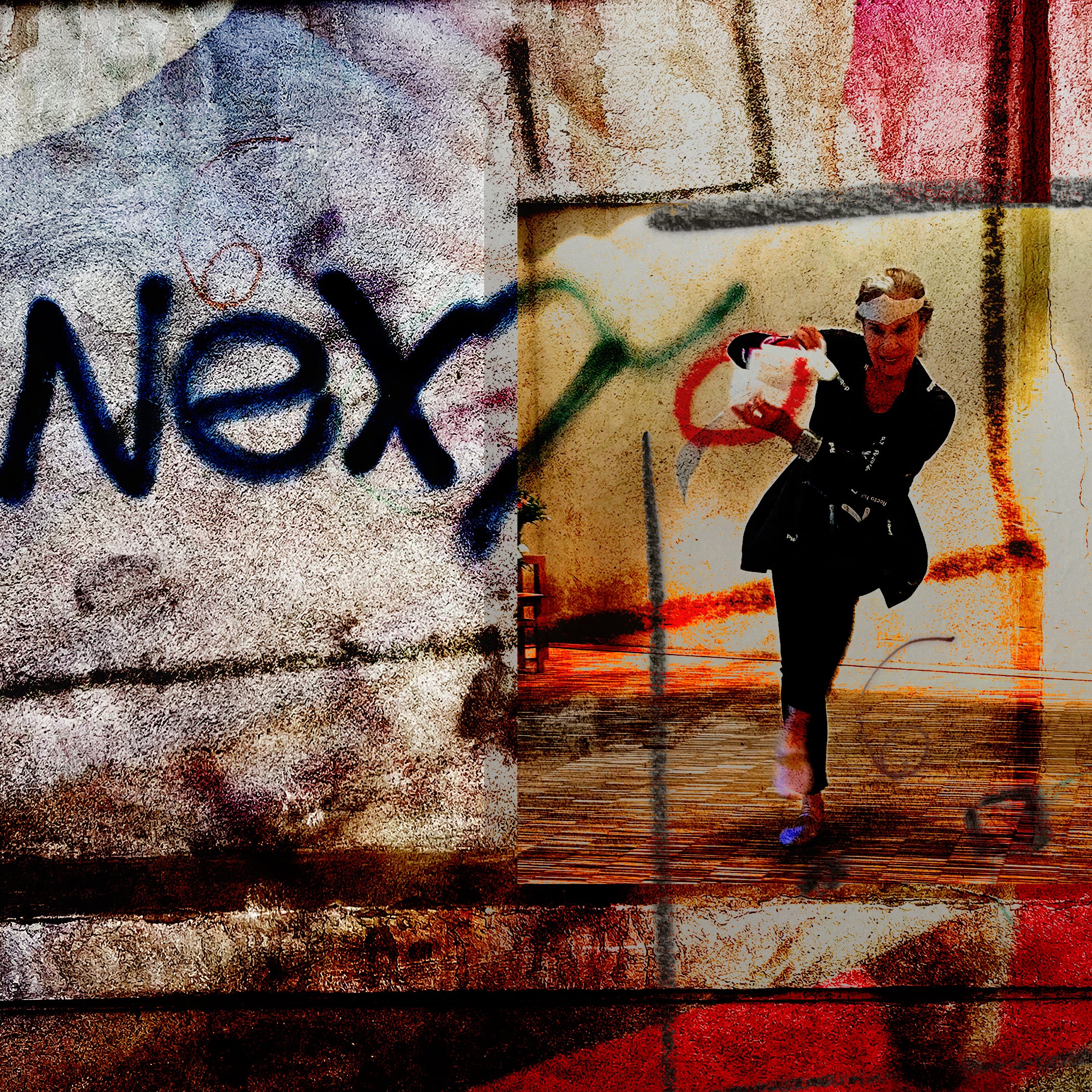
A Prompt from Gail 🌀
I travel the world and many times, I find people can get a bit spacey, unrooted. I have developed a prompt that helps them to notice the real, the actual. Here’s the prompt:
Imagine your kitchen.
Write down a list of 10 or 12 machines, objects. Not the beautiful peach or the flowers that you might have arranged, but material, physical things (the doorknob, the cupboard door, the rice maker, the smoothie maker).
Then the first line of the poem is, “I am rice cooker.”
Go from there.
Two other practices to share:
i have a notebook (other than my journal) this notebook is medium-size, and like all my journals, its pages are UNLINED!!!! to write on lined paper is like being in a PRISON for me. i must be free to be, meander, wander, crooked, draw, between, cross out, create maybe visual art as i write. in this notebook i have lists of words, new words maybe, quotes, quotes from conversations with Yona Harvey maybe, AND my most beloved list: MISREADINGS. when i misread a word. like: weather – (i read as) whatever; prize – praise; masticate – meditate . . . i could go on. however, whatever: juice for many new poems for sure.
the Letter! i am a letter writer. i write long letters by hand. it is a way for me to draw a person close, close into me at my morning marble table. and in this space we converse, share. often in so doing, i discover and awaken to metaphors, themes that would otherwise be hidden below the surface of my attention. it is a worthwhile commitment of hours. then i put the letters in real envelopes, address them and post. maybe before sealing the envelope, I add some heart or star glitter, maybe I seal the pages with real sealing wax stamped with a G or a 5-pointed STAR, or . . .
Are there any books / writers / artists / teachers that have been transformative for you that you would recommend?
Yes! Books that have been a tender and powerful force in recent months: (and note, i read very slowly, cuz i write in the margins, chew thoughts, get up and recite, dance . . . so takes months to complete a book when it is GOOD)
Celia Paul, Self-Portrait: i knew nothing about the English painter Celia Paul, but once she appeared, once her art and her path to a painting and her life and her writing became known . . . an intimate space of meeting occurred . . . Celia became/becomes a friend in my canon of living women artists.
Pico Iyer, Aflame: Pico Iyer’s Aflame is written in such a way that i too can feel what it is like to live and write in a monastery where silence is guarded. Iyer writes out of that space (that word again) in such a way that i can enter process.
Christian Wiman, Zero At The Bone: Christian Wiman teaches me the power and magic of LEAPS . . . how to successfully leap as we write, leap and trust that neither i, the writer, nor the reader will fall . . . TO TRUST that space in the WILDS of in-between-ness-es.
AND: i cannot NOT mention, yes i have a favorite, a beloved, poem out of all the poems that i have read, continue to read, have performed, continue to perform, have translated or not . . . there is one that is pillar, core, part of me and my life with word; Saint John of the Cross, the medieval mystic monk of Spain . . . his “Dark Night / Noche Oscura.” (there is no mention, no where of dark night of the soul . . . that has been added by translators). this 8-stanza poem, written out of his experience of being locked in a Toledo tower for nine months. imprisoned, San Juan de la Cruz was beaten, given little to eat—no way OUT but in. there, when all life of the senses was hushed, there he went in, there he felt the force of spirit light that can be met in order to carve consciously (awaken) a soul out of vital thinking, feeling, doing. it took me 20 years to finally reread this masterpiece, bring it into contemporary English. i had to return to the blank page of a book i have just begun reading, On Beauty and Being Just by Elaine Scarry (here again i misread the second half of her title: On Beauty and Just Being) (OH DEAR, is this misreading thing a curse or a blessing? i say a blessing, notice it, use it).
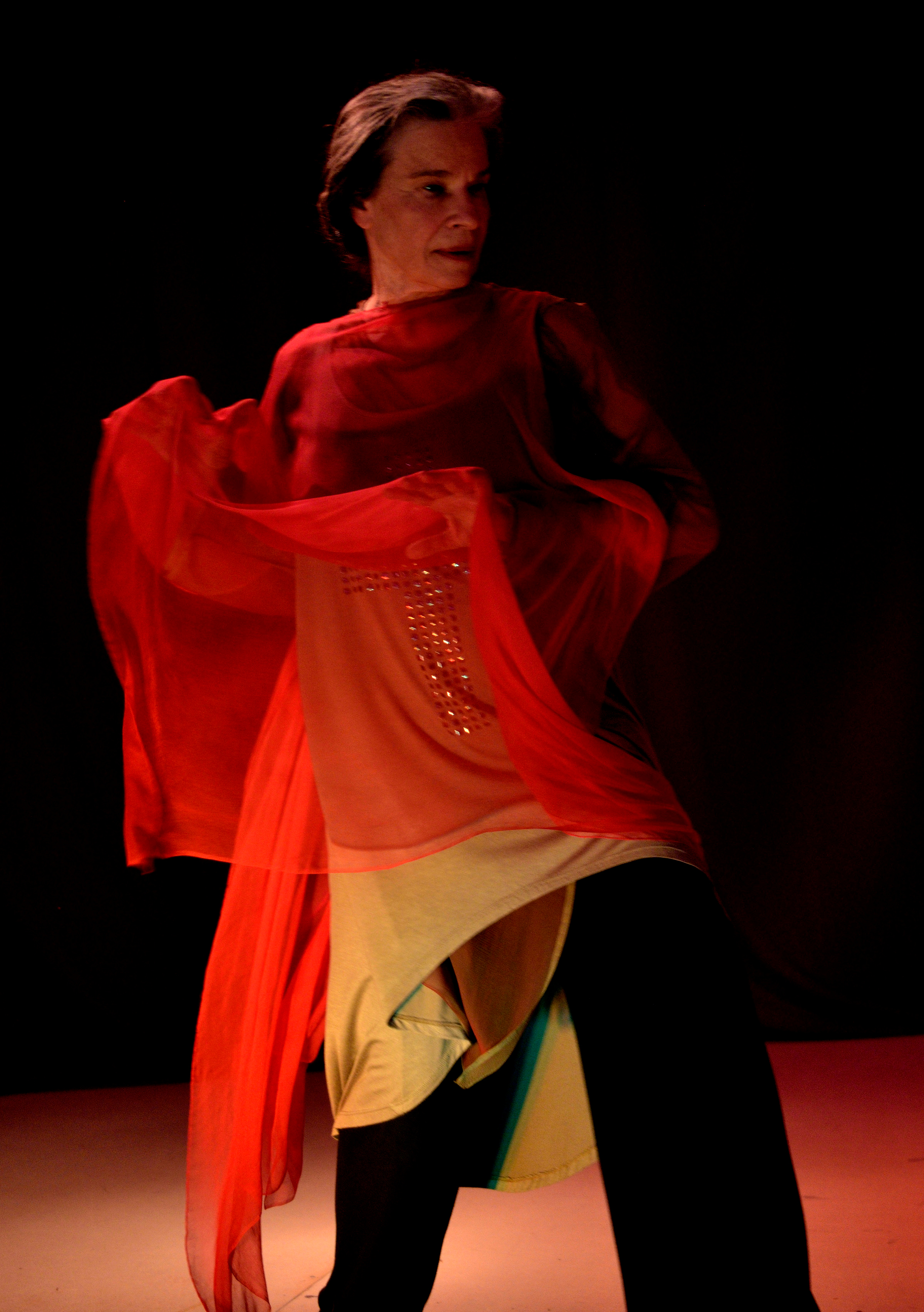
Raised under the Big Skies of Montana, Gail Langstroth is a tri-lingual lecturer, international eurythmy performer, translator, poet, and film artist. She is a graduate of Drew University’s M.F.A. in poetry and winner of the Patricia Dobler Poetry Prize, 2011. Get Fresh Books released Langstroth’s bilingual firegarden / jardín-de-fuego, 2020. February 2025 Lefty Blondie Press released Langstroth’s bilingual chapbook Ghost Friends – in Praise of Jean Valentine. With over 14 films, some inspired by tunnels and streets where the scars of domestic violence are visible, V:OICED: words from asphalt (2021) was showcased in European festivals. STAHLWORTE / STEELWORDS, Langstroth’s performance piece inspired by Dee Briggs’ 72,000 lb. steel sculpture: “Can’t You See!” premiered in The Netherlands, (2021). In October 2023, Before Now / After I, an exhibition of Langstroth’s visual art opened in Hamburg, Germany. Some of her recent publications include: Cyte Magazin, BlackSunFlowers, Midnight Mind, Moonstone, rApport, and WordPeace. Anthologies include The Gulf Tower Forecasts Rain; 50 / 50; and Is It Hot in Here Or Is it Just Me? www.wordmoves.com
Artist Statement: Gail Langstroth
I am not after the pearl, rather
the uncomfortable grain.
I want unresolved raw, the granular rub, the weathered smudge
& slant of a cracked graffiti wall.
To name, shape, dance—I
must feel vulnerable, skinless.
Within Edge-Treacherous I teeter.
Walk with me. Open. Listen.
For more from Gail 🌀
Check out Gail’s multi-faceted work at her website HERE.
Order your copy of Gail’s recent chapbook, Ghost Friends / Duendes Amigos, in praise of Jean Valentine, from Lefty Blondie Press (2025).
Order your copy of Gail’s full-length poetry collection, firegarden/jardín-de-fuego (Get Fresh Books, (2020).
Watch/listen to poems & art from Gail’s book firegarden/jardín-de-fuego (Get Fresh Books, (2020).
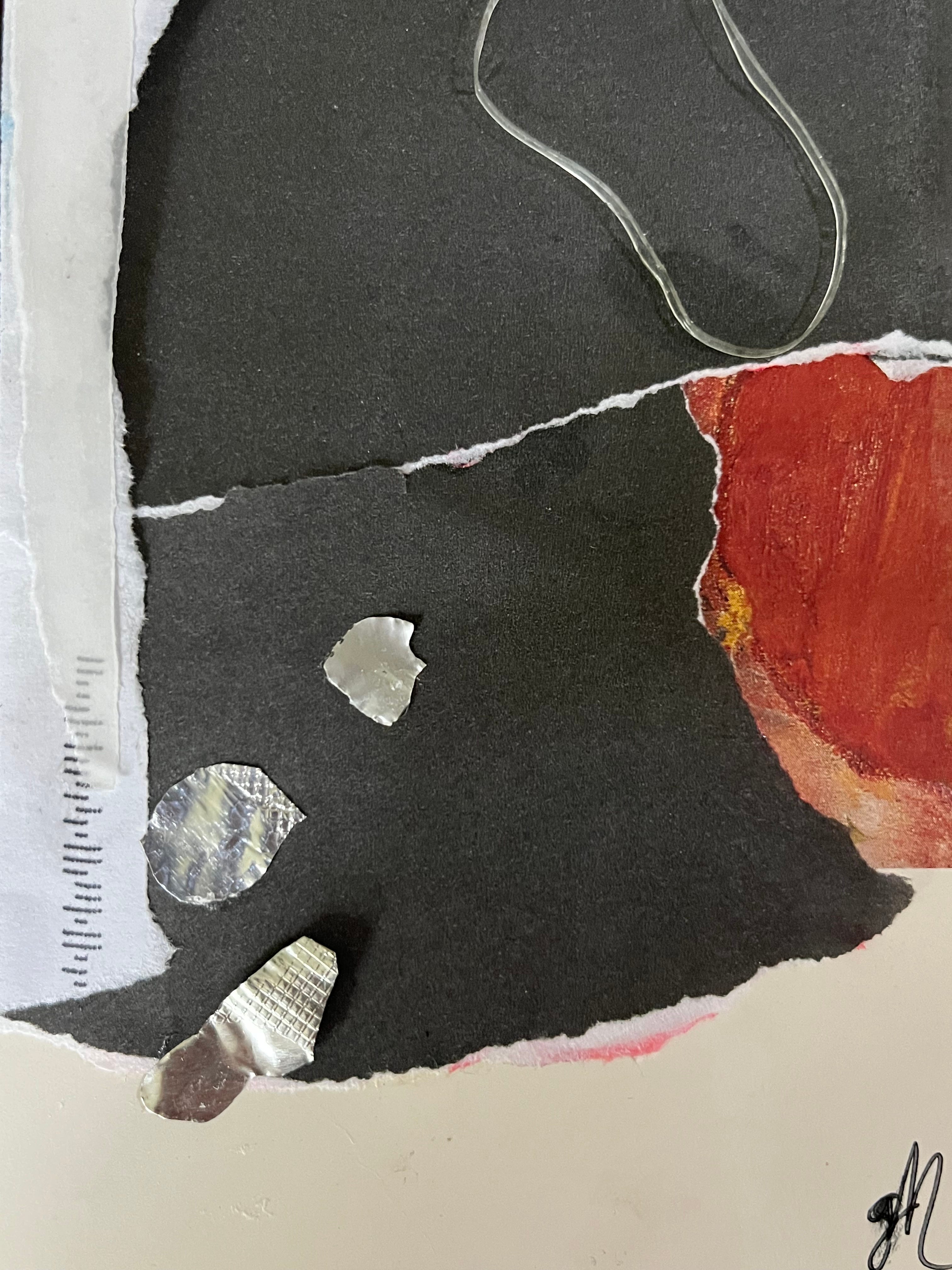
Read/consider Gail’s poem “insert: this” paired with her collage of the same title, below:
insert: this

dwindling, disappearing, thinning
leaves from tree’s crown

people, kindled connections, threads
what you gave root to


—lean into disappearance     seek an-
inner voice & earth—

know your pillar is     your falling glows
as long as your longing pulls

& paints soft into this field
of red wolf-nettle
What You May have Missed on Be Where You Are
The next Ass in Chair Collective this Mon, August 4th is for paid subscribers. The next free one is August 18th. Details below!👇🏼

If you tap that tiny heart before you go, it will help Gail’s work reach more readers! 🌱 Be Where You Are is 100% reader-supported. You can support this work by becoming a free or paid subscriber, or you can make a one-time donation here. Or, you can send it to a friend! Every bit helps more than you know. 🌱
Be Where You Are is a newsletter about how to use writing and mindfulness to live more fully where you are. To reply to this newsletter, just hit reply. I’d love to hear from you! I read and respond to every comment. You can also find me on Instagram / Facebook / Bluesky or find more info at my website.
She’s new to me. Thanks so much for sharing her. Inspiring soul.
A wonderful, wild ride with my dear friend, Gail. Thank you, Emily, for this amazing interview.