
"conscious but gentle collaboration with what is"
parent, educator, writer, and meditator Ryan Rose Weaver on how her mindfulness and creative practices help her advocate for care and reciprocity for all beings 🙏🏼🌱


This is a Beginner’s Mind interview, a series that explores the intersection of mindfulness and creative practice. Zen master Shunryū Suzuki Roshi said, “In the beginner’s mind, there are many possibilities; in the expert’s mind, there are few.” This series shines a light on the practices that sustain people in their daily lives and open the path to new possibilities. Subscribe below to make sure you don’t miss any future interviews. ✨
Ryan Rose Weaver is the author of one of my favorite substack newsletters, In Tending, “a newsletter and community devoted to helping caregivers break free of burnout and live happier, healthier, and more liberated lives.” I found Ryan’s work a little while ago through her interview at Heidi Fiedler’s Mothers Who Make series, then I started noticing how we often shared the same posts in the Substack Notes ecosystem. Since the scroll mostly just eats my brain, I’m grateful for the times it helps me find kindred spirits.
I wish I’d had Ryan’s work on mindfulness and caregiving when I was deep in burnout from parenting and full-time high school teaching. She offers so much wisdom about caregiving of all kinds from a position of curiosity and realness. I especially find her offerings helpful as a parent of a neurodivergent kid, and as a highly sensitive person myself. I’ve thought of her piece, “clearing space for creativity,” many times and her words have helped me in an all-over-the-place creative season: “We need permission to embrace the notion of creativity as subsistence farming, of planting seeds whenever and wherever we can.” YES.
If you’re reading this in an email, click this link so that you don’t miss any of the interview! You’ll love what Ryan shares here about her writing and mindfulness practices, so read on, friends. 🙏🏼🌱
What are your writing/creative practices? Do you have any rituals or habits that help you?
I have identified as a writer since I first wrote a hand-illustrated book about squirrels at age five. I’m still the kind of person who cannot wait to get to my notebook or computer to write, and becoming a busy parent has only made that sense of urgency more acute, as if I am constantly crawling through the desert toward water.
In the past I’ve tried literally everything to create and protect space for my writing to happen. When I went to college, I majored in journalism so that I would be able to write most of the time, and ultimately get paid to do it. My rituals back then involved way too much smoking on deadline with my fellow journalists, and much carousing with chefs and musicians. This created great fodder for storytelling, but ultimately the ‘08 recession made that career approach financially unsustainable, as well as obviously physically unhealthy.
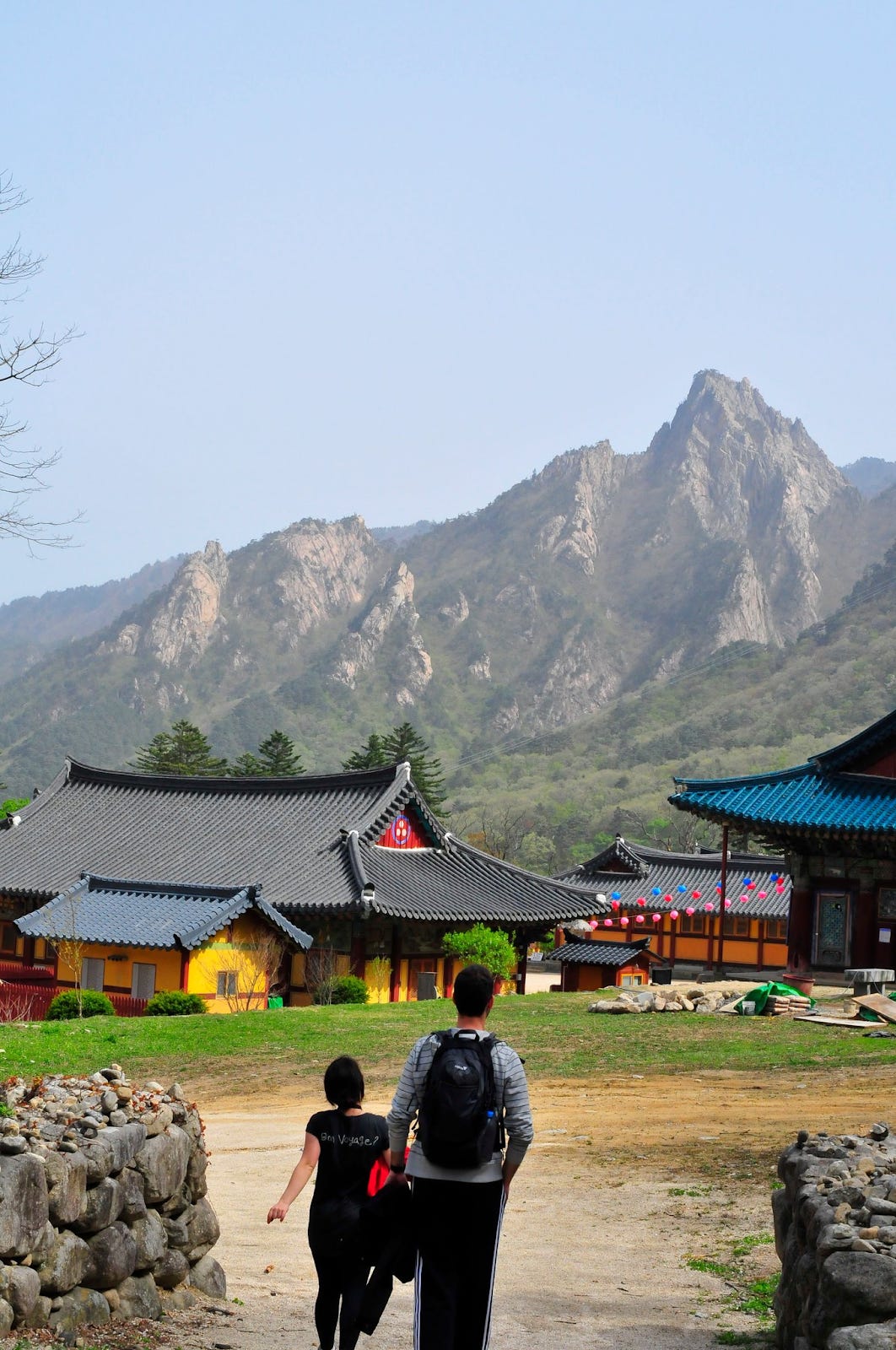
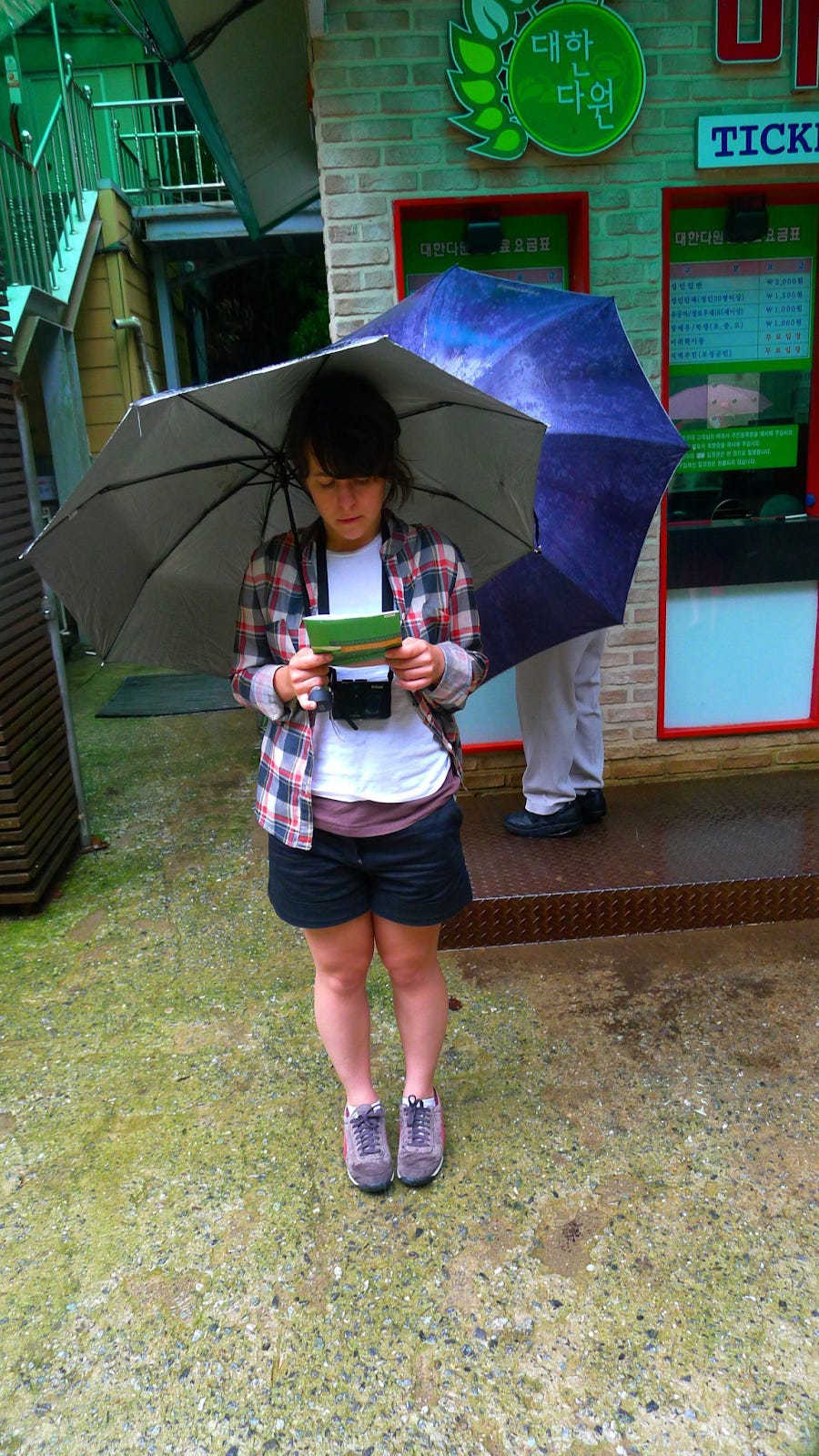
In a twist of fate that went on to shape the next fifteen years of my career, I took an English teaching gig in Seoul. The working hours were 1pm-9pm, so that I could either stay up late or get up early to write. I swapped my whiskey and cigs for green tea and kimbap that year. This was also the year that I started to become serious about meditation, with the help of the monks at my local temple.
Since then, I’ve taught hundreds of kids and adults, in Korea as well as the States. Knowing that I can supplement my writing with teaching income has taken some of the pressure off of this practice for me, and writing here on Substack, where people can pay what they can, has been a real joy. That said, as we know from Mr. Holland’s Opus, the challenge of protecting time for making one’s art, even if you’re also teaching that art form, is just as present when you’re a caregiver as it is when you’re slinging coffee or ad copy. I don’t have an easy solution for that, other than using time on the subway or in the car to fire off a voice memo or jot notes in a journal. Many a book has been written this way.
I still often meditate, do some yoga, and/or make a cup of tea right before I sit down to organize my notes and turn them into something coherent. Eating kimbap as creative ritual also still makes perfect sense to me: it delivers the perfection of Girl Dinner (rice, seaweed, carrots, tuna, pickles) in a form that allows you to eat it all one-handed. Ideal writing fodder!
What are your mindfulness practices? Do you have your own definition or way of thinking about mindfulness? Can you describe your practices and what they bring into your life?
My own personal working definition of mindfulness is probably best summed up as “conscious but gentle collaboration with what is.”
This definition has grown out of my longtime engagement with the words of Jesuit priest Anthony de Mello, who once said, “Enlightenment is absolute cooperation with the inevitable.”
I love the notion of “cooperation” in the context of shared intentions and values, or symbiotic species. Yet it doesn’t feel skillful or compassionate to frame the endless waves of violence we have been witnessing lately as “inevitable,” or to “cooperate” with the forces of grasping, aggression and ignorance that have led to the live-streamed slaughter of innocents. A genuine commitment to nonviolence is not a permission slip for passivity.
Given this, “collaboration” to me implies an ethos of more conscious consent and creativity. It does not mean just sitting there on the cushion like I’m waiting for the bus of the inevitable to arrive, or cooperating with my teachers’ instructions like a kindergartener sitting criss-cross-applesauce on the classroom rug. It implies a stance that is discerning and engaged—with my body, my feelings, my thoughts, and with the world, including the world’s suffering.
At the same time, my approach to practice itself is decidedly gentle too. Particularly because I work with a lot of trauma survivors in my role as a group facilitator for RTZ Hope, and have suffered from PTSD myself. Engaging in a practice that is trauma-informed means there’s lots of choice and modifications built in; it’s not self-critical or overly aggressive; it’s not rigid or forced. As the saying goes about Right Effort: “not too tight, not too loose.” This balanced stance is what keeps the practice from going stale for me.
How do I personally cultivate this sense of conscious, gentle collaboration with what is, in a granular way? Typically I wake up between 6-7am, as my son is stirring, and meditate while he and his dad have breakfast together. (I am extremely fortunate that my partner has long enjoyed morning kid duty, while I am the “closer,” or afternoon parent. Collecting a more teary and cranky kid off the bus is, I think, a fair price to pay for my thirty to forty minutes of morning practice.)
During that time, I usually spend about five minutes fidgeting. Then, I spend the next ten minutes gathering my attention using the breath or my body sensations as an anchor. During the last fifteen to twenty minutes, I engage in metta practice, offering loving-kindness to myself, my family members, the animal and human neighbors I am still getting to know, and then, if I have the energy, to whomever is really pushing the limits of my compassion lately. Usually it’s billionaires; I wrote about that here. Often I then offer the merits of my practice to those who cannot, due to their current causes and conditions, practice for themselves right now.
Then, if I’m lucky, my son runs into the room, does a bunch of ninja moves on the bed, and gives me a gigantic hug. Better than any bell.
What helps you when you get stuck with your creative/writing or mindfulness practices?
As the name of my newsletter might suggest. I think a lot about the power of intention. I don’t mean this in a preachy, woo-woo way; I mean it in a cantankerous, rebellious way, in the sense of “Why should I?” It’s very easy for my calendar to fill up with shoulds and obligations that aren’t in alignment with my ultimate goals or values, so I go back to my “why” several times a week, and am often refining it.
This is especially important in the context of writing on Substack, where there are now so many metrics, many of them vanity-related, that can draw our attention. I have to constantly remind myself that if I’m making progress on the self-defined metrics of success I’ve given myself – if I’m helping caregivers to break free of burnout and live happier healthier more liberated lives, as I have committed to doing with In Tending – then I’ve done what I came here to do.
As we know from meditation practice, it’s not so much about maintaining some particular perspective or view or focus 24/7, but consistently coming back to the anchor we’ve chosen when we forget. And not letting someone else’s idea of a good time interfere with your own intuitive, embodied understanding of what you—and you alone—are being called to do.
It’s also about knowing that not answering one’s calling feels shitty, and will catch up with us eventually. As someone who has sent more than one Call to voicemail, I speak from experience and don’t recommend it.
Do you see your creative and mindfulness practices as connected? In what ways?
In my own mindfulness practice, I have found that as my habitual numbness, distraction, and busyness begin to fall away, a sense of tender brokenhearted-ness – what we might call bodhicitta – begins to throb more palpably, like a sensation that can be felt only as a dose of anesthesia wears off. This is often when my best creative ideas arise.
Sometimes I wonder if we who meditate are just masochists, choosing to be out here raw-dogging reality, as the meme would have it, instead of heading to happy hour for something tasty to take the edge off. When I’ve chosen to do the former instead of the latter, I’ve even gotten razzed by my old journalism friends: “What gives? You used to be fun!” But without this tender connection to my own pain and grief, and to that of others, I don’t know if I would also be as connected to my own intuition, or to my ability to know and do and write the next right thing. I don’t mean to say that my way is better than anyone else’s; my way is just what works for me.
Creativity, to me, feels like the inevitable result of deciding to take compassionate action based on what you encounter on the cushion, if any action at all seems required. And the work on the cushion is what gives me the perspective, and to be honest, the bravery that is needed to be creative, especially in this open-hearted way.
Are there any books / writers / teachers / approaches that have been transformative for you that you would recommend to readers? Can you speak briefly about why?
As I shared above, the community I’m cultivating here on Substack focuses on the ways in which mindfulness can support burnout recovery for caregivers. So Burnout, by the Nagoski sisters, is an obvious, go-to resource. It has really helped me to better understand how burnout happens, particularly in women, and how to care for myself in such a way that I can prevent or mitigate its effects.
The other book to which I refer constantly in our groups is Fierce Compassion by Kristin Neff. Most of the meditation techniques I use and teach to others are thousands of years old, but her scientific distillation of the main components of self-compassion meditation, as well as her research supporting its positive effects for caregivers, has made it a mainstay in both my personal practice and my teaching work. On a more personal note, Neff has a neurodivergent son, as do I, and much of her work on fierceness has arisen from her experiences of needing to protect him from a world that doesn’t always show him compassion. That too resonates with me.
In terms of other books on mindfulness, I would be remiss if I did not deeply bow to the Asian teachers who have given so much of their time and energy to educating us Westerners, such as your friend and mine, the author of Zen Mind Beginner’s Mind, Shunryu Suzuki, and Vietnamese Zen Master Thich Nhat Hanh, who brought us the essential concept of Engaged Buddhism.
That said, I also really treasure writings on mindfulness that include the embodied experiences of women. These include Radical Acceptance by Tara Brach, in which she details coming to Buddhism after being publicly shamed in another spiritual community for losing a pregnancy, as well as Lama Tsultrim Allione’s work, in which she describes losing a child and encountering less-than-compassionate responses from her male sangha members for being so “attached.”
Unfortunately, the history of Buddhist meditation is riddled with tales of less-than-enlightened male teachers who have harmed, dismissed or exploited women, even if they have contributed much to our collective understanding of the dharma. So I am also grateful for books like Rita Gross’s Buddhism After Patriarchy, which confront this tension head-on, while also identifying what Gross calls “a usable past” for women practitioners. Her work in particular has been a huge influence on the book I’m drafting, in which I build on the work of the aforementioned women and try to take it forward, in my own small way.
I’m thankful to have many incredible writers in my digital sangha who are walking this path with me, offering wise counsel and good company. These include Adriana DiFazio, who writes Radical Change; Sarah Kokernot, who writes Your Wild and Radiant Mind; Don Boivin, who writes Shy Guy Meets the Buddha; Jeremy Mohler, who writes Make Men Emotional Again; and Maia Duerr, who writes The Practice of Life, and who has been a caring mentor to me not only as a writer but a founder given her work on right livelihood. I’m also grateful to have you as a part of my Substack sangha!
A Practice from Ryan
In our last get-together for In Tending, we spent some time gathering our attention with this basic insight practice, which to me is like, the No. 2 pencil of mindfulness practices.
Then, we spent some time using this writing prompt on naming our needs, authored by my friend Meredith Rodriguez, who has her own powerful parent coaching practice and approach to tending.
It was really moving to see the honesty and bravery people brought to this exercise; in a culture that often tells caregivers that their worth is equal to the degree to which they martyr themselves, it is radical to know and name the fact that we too deserve care, and reciprocity.
Ryan Rose Weaver is a writer, educator, sped mom, and meditator devoted to seeing her fellow caregivers break free of burnout and live more liberated lives.
Subscribe to Ryan’s substack newsletter below👇🏼
Read more about Ryan’s donation-based circles for caregivers here
Get on the list for In Tending’s next online caregiver circle here (our next one will be held on Dec 2 at 10:30am EST; we’ll be talking about burnout prevention)
Meditate with Ryan in person in Central MA in November!
Your turn: Any other questions for Ryan? We’d love to hear from you below.


Before you go, will you take one moment to hit the LIKE button or leave a quick comment? This one simple action is incredibly effective at helping to spread the word about Ryan’s work & what’s happening at Be Where You Are.
🌱 Be Where You Are is 100% reader-supported. You can support this work by becoming a paid subscriber for 5$ a month or make a one-time donation here if you value this work but can’t subscribe. Or, just send it to a friend! 🌱
Be Where You Are is a newsletter about how to use writing and mindfulness to live more fully where you are. To reply to this newsletter, just hit reply. I’d love to hear from you! You can also find me on Instagram/Facebook/Bluesky or find more info at my website.
 | A guest post by
|